Retinol
视黄醇
Also known as: Vitamin A
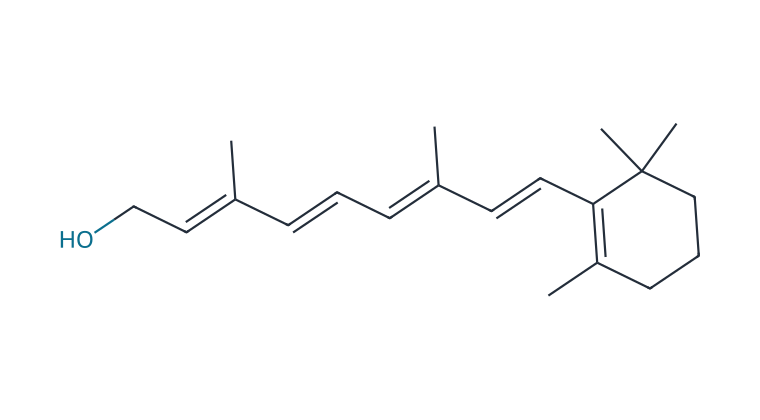
What it does
- Accelerates cell turnover
- Stimulates collagen production
- Reduces fine lines and wrinkles
- Helps with acne
- Fades hyperpigmentation
Effective concentration
Start low and increase gradually. Higher isn't always better.
Evidence
Strong evidenceGold standard anti-aging ingredient with decades of research.
Skin types
Requires careful introduction. Use sunscreen during the day.
Helps with
Interactions
Using together can increase irritation. Best to alternate nights.
Can oxidize and deactivate retinol. Use at different times.
AVOID during pregnancy. Use bakuchiol or azelaic acid instead.
Good to know
Most proven anti-aging ingredient. Results take 3-6 months. Always use SPF.
References
Compound data from PubChem (U.S. National Library of Medicine).
Further reading
- Round Table Discussion: Aesthetic Treatment Considerations for the Perimenopausal & Menopausal Patient — J Cosmet Dermatol (2026)
- The Next Generation of Skin Care: Transforming Retinoid Therapeutics — Cells (2025)
Selected peer-reviewed reviews on this ingredient, indexed by Europe PMC. Provided as background, not proof of any specific claim.
Related ingredients
Have a product with this ingredient?
Paste the full ingredient list to get a personalized analysis.
Analyze a productEducational information only — not medical advice. Always patch test and consult a dermatologist for skin concerns.